
Baby Ear Piercing Aftercare and Infection Signs
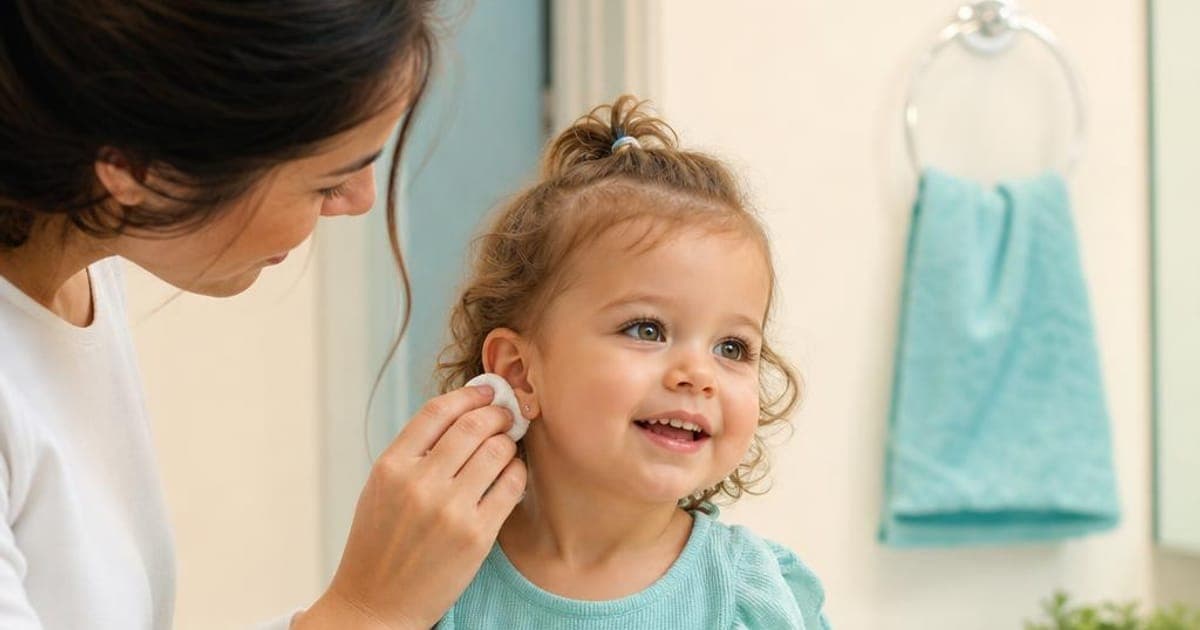
Most new ear piercings heal without trouble in about 6 weeks. The routine is simple: clean twice a day, leave the starter studs in, and keep little hands away. This guide covers exactly what to do, what normal healing looks like, and how to tell an infection from an allergy.
Daily aftercare for the first 6 weeks
- Wash your hands first. Most piercing infections start with germs from fingers.
- Clean twice a day. Use a cotton swab or pad with the piercing solution you were given, or sterile saline. Clean the front and back of each earlobe and the exposed post.
- Follow your aftercare sheet on turning the stud. Some instructions, including AAP guidance, suggest gently turning the earring after cleaning so skin does not stick to the post. Only do this on a clean, wet earlobe with clean hands.
- Pat dry with a clean tissue or gauze.
- Check the backs. They should sit snugly but leave a small gap so the earlobe is not squeezed. Tight backs reduce blood flow and can become embedded.
What to avoid
- Rubbing alcohol or hydrogen peroxide on a new piercing (they dry out and irritate healing skin)
- Taking the studs out before 6 weeks, even for a bath or a photo
- Swimming pools, lakes, and hot tubs for the first 2 weeks if you can avoid them
- Hats, headbands, and sweaters that catch on the earrings
Wash pillowcases and crib sheets often, and brush hair carefully around the ears.
What normal healing looks like
In the first 1 to 2 weeks it is normal to see:
- Mild pinkness right around the hole
- A little tenderness when the ear is touched
- Clear or whitish fluid that dries into a light crust on the post
These should steadily improve, not get worse, over the following days.
Signs of an infected ear piercing
Call our office if you notice:
- Redness that spreads beyond the area right around the earring
- Swelling, warmth, or pain that is getting worse instead of better
- Yellow or green pus
- A swollen lymph node in front of or behind the ear
- The earring back sinking into the earlobe, or part of the earring stuck under the skin
- No improvement after 3 days of extra cleaning
Seek care right away if:
- The infected ear comes with a fever
- Your baby is under 3 months old and has any fever of 100.4°F (38°C) or higher
- Redness is spreading quickly or there are red streaks
- Your child looks or acts very sick (call 911 for trouble breathing or if your child is hard to wake)
Caring for a mild infection at home
AAP guidance for a minor infection in a new piercing is to leave the earring in, clean 3 times a day, and apply a thin layer of over-the-counter antibiotic ointment after cleaning until the redness and drainage have been gone for 2 days. Most mild infections clear in 1 to 2 weeks. Please call us before starting home treatment for a baby or toddler so we can take a look if needed. We can see your child at a same-day sick visit.
Infection or nickel allergy?
Nickel is one of the most common causes of allergic skin rashes in children, and earrings are a frequent trigger. An allergy usually looks different from an infection:
- Allergy: itchy, red, sometimes flaky or weepy skin on the earlobe, often appearing after a switch to new fashion earrings. No pus and no fever.
- Infection: painful, swollen, warm, and sometimes with pus. It can happen with any metal.
If you suspect nickel allergy, switch to titanium, surgical stainless steel, or solid 14-karat or higher gold posts. Children with eczema may be more prone to metal reactions; our eczema and allergy care team can help sort out ongoing rashes.
After 6 weeks: changing earrings
- Wait the full 6 weeks before the first change.
- Choose small studs with secure backs for babies and toddlers. Skip hoops and dangles, which catch and tear.
- Keep cleaning the posts and earlobes a few times a week.
- Leave earrings in most of the time for the first 6 months, since new holes can shrink quickly when left empty.
Worried About Your Child's Piercing?
If an earlobe looks red, swollen, or crusty and is not improving, we can check it quickly. Families who had ears pierced at our office can call with aftercare questions anytime during office hours. Learn more about our baby and toddler ear piercing.
Call us at (609) 808-3123 during office hours:
- Monday to Friday: 9:30 AM to 5:30 PM
- Saturday: 9:30 AM to 12:30 PM
Common Questions from Parents
How do I clean my baby's newly pierced ears?
Twice a day, wash your hands, then use a cotton swab or pad with the piercing solution you were given (or saline) to clean the front and back of each earlobe and the exposed part of the post. Pat dry. Do not use rubbing alcohol or hydrogen peroxide on a new piercing because they irritate healing skin.
How long should baby starter earrings stay in?
Leave the starter studs in for 6 weeks, day and night. The channel through the earlobe is still healing during that time and can close or become irritated if the earring is taken out early.
What does an infected ear piercing look like on a baby?
Some pinkness and a little clear or crusty discharge are normal in the first weeks. Signs of infection include redness that spreads beyond the piercing, swelling, warmth, increasing pain, yellow or green pus, or fever. Call us if you see any of these.
Should I take the earring out if the ear looks infected?
No. During the first 6 weeks, leave the earring in so the infection can drain and the hole does not close over it. Clean the area 3 times a day and call our office. If the earring back is sinking into the earlobe, call the same day.
Could the redness be an allergy instead of an infection?
Yes. An itchy, red, sometimes weepy rash on the earlobe, without pus or fever, often points to nickel allergy. It usually shows up after switching to fashion earrings. Going back to titanium, surgical stainless steel, or solid gold posts usually clears it up.
Sources
- HealthyChildren.org (AAP): Ear Piercing Symptoms, when to call and care advice (accessed October 26, 2026)
- AAP Clinical Report: Nickel Allergic Contact Dermatitis in children (Pediatrics, May 2020)
- American Academy of Dermatology: Nickel allergy, how to avoid exposure
- Association of Professional Piercers: Aftercare guidelines