
Medical vs. Mall Ear Piercing for Babies and Kids
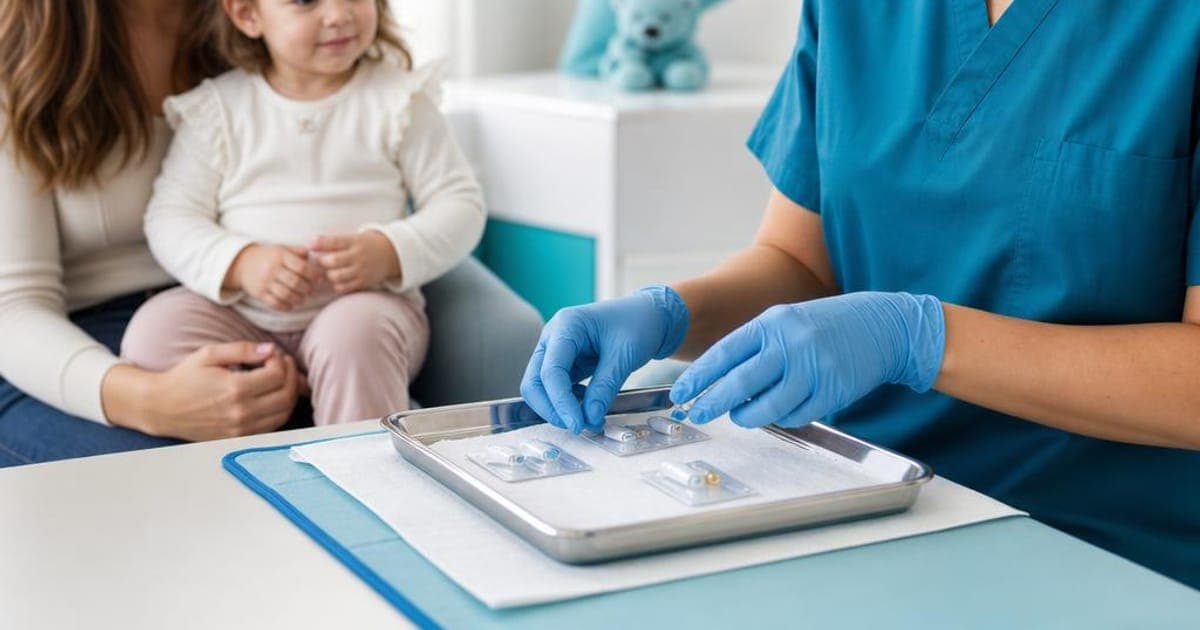
Parents searching for "toddler ear piercing near me" usually find two options: a store at the mall or a pediatric office. Both can produce a nice result. The differences are in the equipment, the metal, who does the piercing, and what happens if something goes wrong.
Side-by-side comparison
| Pediatric office | Typical retail store | |
|---|---|---|
| Who pierces | Pediatrician or trained clinical staff | Retail employee; training varies by store |
| Equipment | Sealed, pre-sterilized, single-use cartridges | Varies; some reusable guns cannot be fully sterilized |
| Skin prep | Antiseptic cleaning and gloves | Varies by location |
| Earring metal | Medical-grade titanium or surgical stainless steel | Often hypoallergenic options, but check the label |
| Placement | Marked and checked for symmetry, baby held safely | Varies by staff experience with infants |
| If a problem develops | Same office can examine and treat | Referred to your doctor |
1. Sterile, single-use equipment
The biggest difference is infection control. Medical offices typically use a hand-pressured system with sealed, pre-sterilized cartridges: the earring is the only part that touches your child, and the cartridge is thrown away afterward. Reusable spring-loaded piercing guns have plastic parts that cannot go through a medical sterilizer, so they are wiped down between customers instead. The AAP has noted that infection and other complications from piercing are more likely when equipment is not sterile.
2. The metal in the starter stud
Nickel allergy is one of the most common skin allergies in children, and a first pair of earrings is often how it starts. Medical-grade titanium and surgical stainless steel are the safest choices for a new piercing. Many retailers offer hypoallergenic studs too, so ask exactly what metal the post is made of.
3. Someone experienced with babies
Piercing a wiggly 6-month-old evenly is a skill. In a pediatric office, the person piercing works with infants every day, knows how to position and hold a baby safely, and marks both earlobes carefully before starting. We also check that your baby is healthy that day and has had their first vaccines, including the tetanus series.
4. Follow-up if something goes wrong
Most piercings heal well. When one does not, a pediatric office can look at the ear, tell an infection from a nickel reaction, and treat it. Our aftercare guide covers what normal healing looks like and which signs need a call.
When a retail store can still be a reasonable choice
Older children who can sit still and handle their own aftercare often do fine at a reputable store. If you go that route, ask these questions first:
- Do you use sealed, single-use sterile cartridges, or a reusable gun?
- What metal are the starter studs made of?
- Do staff wash hands and wear new gloves for each customer?
- Do you pierce earlobes only for young children? (Cartilage piercing is not appropriate for kids.)
Book a Pediatrician-Performed Ear Piercing
We pierce ears for babies and toddlers up to age 3 using sterile technique and hypoallergenic starter studs, by appointment in Robbinsville. See the details on our baby and toddler ear piercing page.
Call us at (609) 808-3123 during office hours:
- Monday to Friday: 9:30 AM to 5:30 PM
- Saturday: 9:30 AM to 12:30 PM
Common Questions from Parents
Is medical ear piercing safer than getting ears pierced at the mall?
For babies and toddlers, a medical setting removes several common risks: equipment is sterile and single-use, starter studs are hypoallergenic, the person piercing is a clinician trained in infection control, and any problem can be checked by the same office afterward. Many retail stores do a careful job, but practices vary from location to location.
Do pediatricians use a piercing gun?
Most medical offices use a hand-pressured system with pre-sterilized, sealed cartridges, where the earring itself is the only part that touches the ear and everything is discarded after one use. That is different from a reusable spring-loaded gun, which is hard to sterilize between customers.
Does medical ear piercing hurt less?
The piercing itself takes about the same split second either way. The calmer setting, careful marking, and staff used to soothing babies tend to make the experience easier for parents and children.
What age does your office pierce ears?
We pierce ears for babies who are at least 2 months old and have had their first vaccines, up to age 3, by appointment at our Robbinsville office.
Is medical ear piercing covered by insurance?
Ear piercing is cosmetic, so insurance does not cover it. Call our office for current pricing and appointment availability.
Sources
- AAP Clinical Report: Adolescent and Young Adult Tattooing, Piercing, and Scarification (Pediatrics, October 2017)
- HealthyChildren.org (AAP): Ear Piercing Symptoms (accessed October 26, 2026)
- AAP Clinical Report: Nickel Allergic Contact Dermatitis in children (Pediatrics, May 2020)