Speech Delay in Toddlers: When to Worry and What to Do
My Toddler Isn't Talking — Should I Be Worried?
It's one of the most common concerns we hear from parents of toddlers: "My 18-month-old only says a few words." "My 2-year-old isn't putting words together." "Everyone says he'll talk when he's ready — but how do I know when to actually do something about it?"
Speech delay is genuinely common — affecting about 10–15% of toddlers — and the range of normal development is wide. But waiting too long to seek an evaluation when a delay is real can mean missing a critical window for intervention. Early support for speech and language delays leads to significantly better outcomes.
Here's what you need to know about speech milestones, what a real delay looks like, and when to call your pediatrician.
Speech and Language Milestones by Age
These milestones represent what most children can do by each age — not what all children do. There is a range of normal, but significant gaps below these benchmarks warrant evaluation.
By 12 Months
- • Babbles with varied sounds and tones (ma-ma, ba-ba, da-da)
- • Uses at least 1–2 words with meaning (not just babble)
- • Responds to their name being called
- • Understands simple words like "no" and "bye-bye"
- • Points to show you things, waves, or gestures
By 18 Months
- • Uses at least 6–10 words meaningfully
- • Points to show interest and to communicate
- • Follows simple one-step directions ("Get the ball")
- • Identifies familiar objects and body parts when named
By 24 Months (2 Years)
- • Uses at least 50 words
- • Combines 2 words together ("more milk," "daddy go," "big dog")
- • Strangers can understand about 50% of what the child says
- • Follows 2-step directions
- • Uses words more than gestures to communicate wants
By 36 Months (3 Years)
- • Uses 3–4 word sentences regularly
- • Vocabulary of 200+ words
- • Strangers can understand about 75% of what the child says
- • Asks "what" and "who" questions
- • Can tell a simple story or retell a recent event
Red Flags That Warrant Immediate Evaluation
Regardless of age, the following signs should prompt a call to your pediatrician without delay:
- No babbling by 12 months — especially with varied consonant sounds
- No words at all by 16 months
- No two-word combinations by 24 months (other than imitating what someone just said)
- Loss of language skills at any age — a child who was saying words and stops is always a priority for evaluation
- No pointing, waving, or showing by 12 months — these social communication gestures are early indicators of language development
- Not responding to their name by 12 months
- Difficulty understanding simple words or directions beyond the expected age
Language Loss Is Always Urgent
If your child was saying words or making progress and has stopped — even for just a few weeks — this is a red flag that warrants prompt evaluation. Language regression can be a sign of autism spectrum disorder, hearing loss, or other conditions that require timely assessment.
Why Early Intervention Matters
The brain is most "plastic" — most responsive to learning and intervention — in the first three years of life. Children who receive speech therapy during this window often make dramatically better progress than those who start therapy after age 3 or 4. The common advice to "wait and see" is outdated and potentially harmful when a real delay is present.
In New Jersey, children from birth to age 3 with developmental delays qualify for Early Intervention — free state-funded services including speech therapy, provided in the home or community setting. After age 3, public school districts are required to provide evaluation and services. Your pediatrician can start this referral process.
What Causes Speech Delay?
Speech and language delay has many possible causes. An evaluation helps identify which applies:
- Hearing loss — one of the most common causes. A child who cannot hear clearly cannot learn to produce speech accurately. If your child hasn't had a hearing test recently and has a speech delay, this should be the first step.
- Expressive language delay — difficulty producing words and language despite good comprehension. These children understand much more than they can say.
- Receptive-expressive language delay — difficulty with both understanding and producing language. More significant, and more likely to need intensive support.
- Autism spectrum disorder — speech delay is often (but not always) a feature of autism. The key distinguishing characteristic is how the child uses language socially — for social connection, requesting, commenting, and sharing attention.
- Developmental delay — global delays affecting multiple areas of development including language.
- Late talker — some children with no other developmental concerns simply talk later than peers. Some catch up on their own; others do not. An evaluation helps determine which.
What You Can Do at Home
While you wait for or arrange an evaluation, these strategies actively support language development:
- Talk constantly — narrate your day ("Now I'm putting on your socks. One sock, two socks!"). The more language a child hears, the faster they develop.
- Expand and model — when your child says "ball," say back "Yes! Big red ball!" This models slightly more complex language without pressuring them to repeat it.
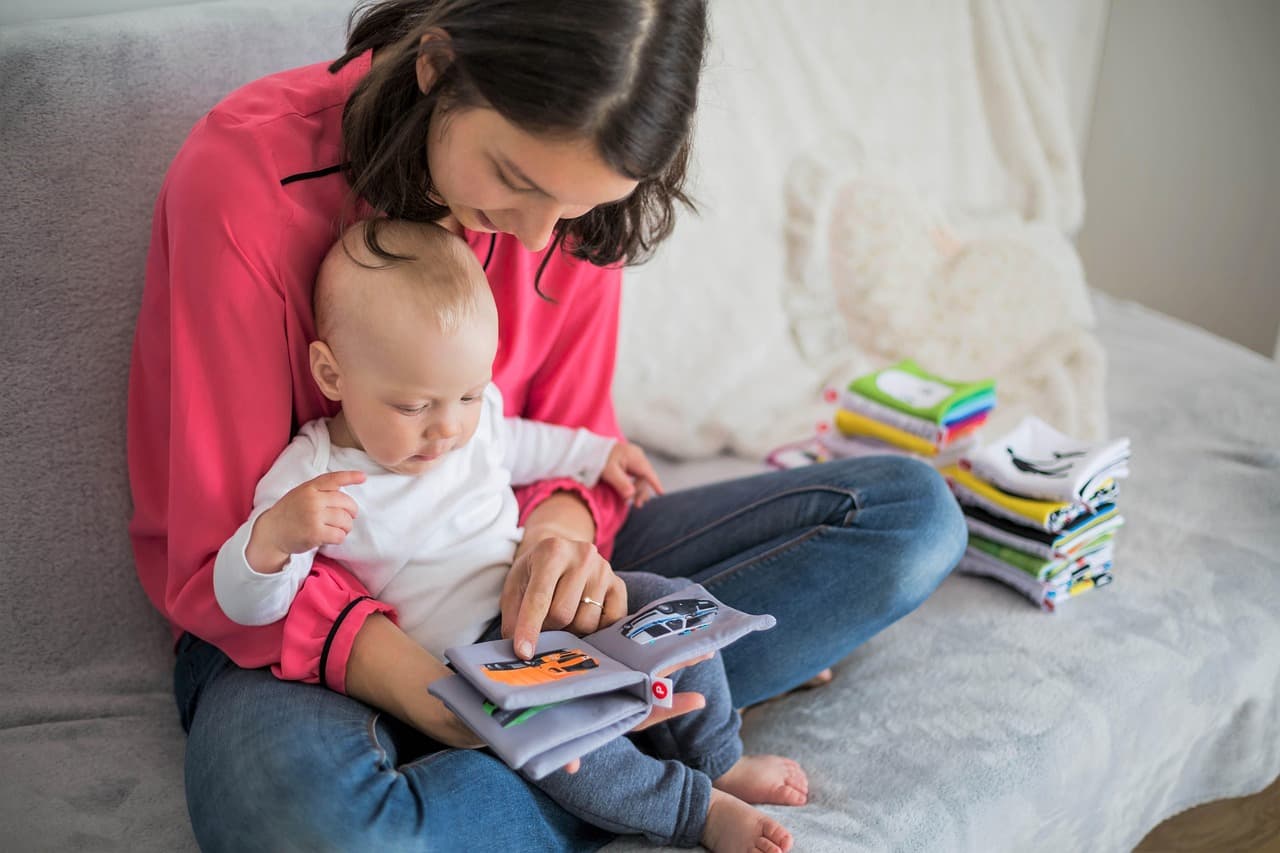
- Read aloud every day — even a few picture books daily significantly boosts vocabulary and language comprehension.
- Reduce screen time — passive screen viewing (even educational shows) does not develop language the way live conversation does, especially under age 2.
- Follow your child's lead — play with what they're interested in and talk about what they're attending to.
Frequently Asked Questions
How many words should a 2-year-old say?
By 24 months, most children use at least 50 words and are starting to combine two words together, such as "more milk," "daddy go," or "big ball." Strangers should be able to understand about 50% of what the child says. If your 2-year-old is not yet combining words or has fewer than 50 words, a developmental evaluation is recommended.
My toddler understands everything but won't talk. Is that still a speech delay?
Yes — if a toddler understands language well but is significantly behind in producing words or sentences, that is an expressive language delay and warrants evaluation. The good news is that children with strong comprehension often respond very well to speech therapy. Don't wait to have it evaluated even if your child understands everything.
When should I be worried about my child's speech?
See your pediatrician if your child has no words by 16 months, no two-word combinations by 24 months, loses language skills at any age, doesn't respond to their name by 12 months, isn't pointing or waving by 12 months, or is significantly harder to understand than other children the same age. Language loss is always urgent — don't wait for the next scheduled visit.
Can bilingual children have speech delay?
Bilingual children may appear to have smaller vocabularies in each individual language compared to monolingual peers, but their total combined vocabulary across both languages is usually on track. Being bilingual does not cause speech delay. True speech delay involves being behind in total word count across all languages, or difficulty with the structure and grammar of language.
What is Early Intervention for speech delay in New Jersey?
Early Intervention is a free, state-funded program in New Jersey for children from birth to age 3 who have developmental delays, including speech and language delays. Services — including speech therapy — are provided in the home or community setting at no cost to families. Your pediatrician can start the referral process.
Concerned About Your Child's Speech?
At Hummingbird Pediatrics, we monitor speech and language development at every well-child visit and perform formal developmental screenings. If you have concerns, don't wait for the next scheduled visit — early referral to speech therapy can make a real difference in your child's outcomes.
We serve families throughout Robbinsville, Hamilton, East Windsor, West Windsor, Bordentown, and the Princeton area.