
Speech Development in Toddlers: Milestones, Late Talking, and When to Seek Help
Last Reviewed:
This health information is reviewed by board-certified pediatricians and follows current American Academy of Pediatrics (AAP) guidelines.
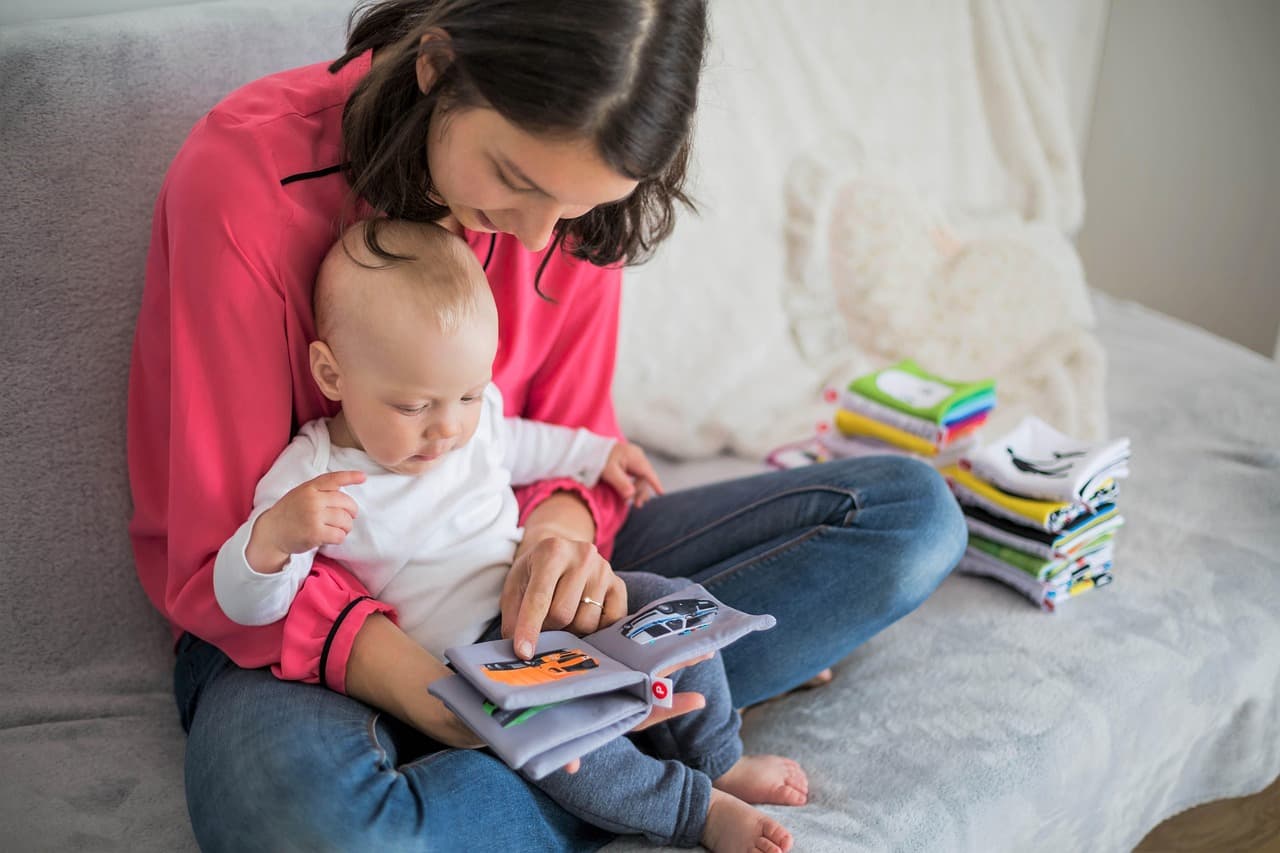
"Is my child talking enough?" is one of the most common questions we hear from parents of toddlers, and it's one of the most important questions to take seriously. While speech and language development varies widely among typically developing children, certain milestones are meaningful benchmarks — and missing them warrants prompt evaluation rather than a "wait and see" approach.
At Hummingbird Pediatrics in Robbinsville, we screen for speech and language development at every well-child visit and take parental concerns about communication seriously. Early speech therapy makes a significant difference in outcomes, and early referral is never wasted.
Understanding the Difference: Speech vs. Language
Before diving into milestones, it helps to distinguish two related but different things:
- Speech refers to the physical production of sounds — how clearly your child pronounces words
- Language refers to understanding and using words to communicate — vocabulary, grammar, following directions, and social use of language
A child can have a speech problem (unclear pronunciation) with typical language, or a language problem with clear speech, or both. Evaluation by a speech-language pathologist (SLP) assesses both.
Speech and Language Milestones by Age
These are widely-used benchmarks based on American Speech-Language-Hearing Association (ASHA) guidelines:
12 Months
- Babbles with consonant sounds (da-da, ba-ba, ma-ma) with communicative intent
- Uses at least 1 true word (a word used consistently for the same meaning: "dada," "milk," "dog")
- Responds to their name being called
- Waves bye-bye, raises arms to be picked up, points to request
- Understands "no" and a few familiar words
18 Months
- Uses at least 10–15 words consistently
- Points to show interest in things (not just to request)
- Follows simple 1-step directions ("Give me the ball")
- Understands about 50+ words
18-month red flags: No words at 16 months; not pointing to share interest; not following simple directions
24 Months
- Uses at least 50 words
- Combines two words into simple phrases ("more milk," "daddy go," "big dog")
- Strangers can understand about 50% of what they say
- Follows 2-step related directions ("Get your shoes and bring them here")
24-month red flags: Fewer than 50 words; no two-word combinations; cannot follow a 2-step direction
36 Months (3 Years)
- Uses 3–4 word sentences regularly
- Strangers can understand about 75% of what they say
- Asks and answers simple questions
- Uses plurals, past tense (with errors — "We goed to the store"), pronouns (I, you, me)
- Can tell a simple story about something that happened
4 Years
- Speaks in 4–5 word sentences
- Strangers can understand 90–100% of speech
- Can answer "who," "what," "where," and "why" questions
- Follows 3-step instructions
Late Talker vs. Language Disorder: What's the Difference?
Late Talker
A "late talker" is a child — usually between 18 and 30 months — who has fewer words than expected for their age but shows otherwise typical development: good social skills, solid nonverbal communication (eye contact, gesturing, pointing), age-appropriate play, and good comprehension.
Many late talkers do "catch up" by age 3 without formal intervention — this is sometimes called "late bloomer" speech development. However, research shows that a significant proportion of late talkers do not fully catch up and benefit significantly from early intervention.
Because we cannot reliably predict at 18 or 24 months which late talkers will catch up and which won't, the current recommendation is: if in doubt, refer for evaluation. Early speech therapy has no downside for a child who doesn't need it and significant benefits for one who does.
Language Disorder
A language disorder is present when delays are more pervasive — involving both expressive language (talking) and receptive language (understanding), not improving with time, or accompanied by other developmental concerns like limited social engagement, repetitive behaviors, or sensory differences.
Language disorders are associated with autism spectrum disorder, intellectual disability, developmental language disorder (DLD), hearing loss, and other conditions. If your child is behind in speech AND social skills, AND pointing AND eye contact, the evaluation should include a broader developmental assessment.
When to Request a Speech Therapy Evaluation
- Your child has no words at 16 months
- Your child has fewer than 50 words or no two-word phrases at 24 months
- Your child lost language skills they previously had (regression at any age is always a red flag)
- You can understand very little of what your 3-year-old says
- Your child's speech is frustrating them — tantrums or withdrawal because they cannot communicate
New Jersey Early Intervention
If your child is under 3 years old, you can self-refer to New Jersey's Early Intervention program at no cost to your family by calling 1-888-653-4463. You do not need a doctor's referral. An evaluation team will assess your child's development and provide speech therapy services if eligible.
For children 3 and older, public school districts are required to provide free speech and language evaluations and, if eligible, speech therapy services through the child's IEP.
Your pediatrician at Hummingbird Pediatrics will also provide a referral for private speech therapy evaluation and can help coordinate with your insurance.
What You Can Do at Home
- Talk constantly during daily routines — narrate what you're doing ("Now we're washing hands with warm water and soap")
- Read books together starting in infancy — point to pictures and name them
- Follow your child's lead in play — talk about what they're interested in
- Limit screen time — passive screen viewing does not build language the way interaction does
- Don't wait for perfect pronunciation to respond — respond to communication attempts even when imperfect
- Reduce background noise (TV, music) during conversation time
If you have any concern about your child's communication, bring it to us. There is no such thing as raising a speech concern too early.
Frequently Asked Questions
How many words should my 2-year-old have?
By 24 months, most children have a vocabulary of at least 50 words and are combining two words into simple phrases ('more milk,' 'daddy go,' 'big dog'). Strangers should be able to understand about 50% of what they say. If your 2-year-old has fewer than 50 words or is not yet putting two words together, request a speech and language evaluation. Don't wait for the next scheduled well-child visit.
What is a late talker vs. a language disorder?
A late talker is a child (usually 18–30 months) with fewer words than expected but typical social skills, good eye contact, pointing, gesturing, and showing interest in others. A language disorder is more pervasive and involves delays in understanding language (not just producing it) and may accompany other developmental concerns. A speech-language pathologist evaluation is the best way to distinguish them.
My child understands everything I say but barely talks. Is that still a delay?
Strong comprehension is a positive sign, but expressive language (speaking) still needs to meet milestones. A child who understands well but has a significantly limited vocabulary and no two-word phrases at 24 months should still be evaluated. Many late talkers with good comprehension do catch up, but early evaluation ensures children who need support get it in time.
How do I self-refer to New Jersey Early Intervention?
If your child is under 3 years old, you can self-refer to NJ Early Intervention at no cost. You do not need a doctor's referral. Call 1-888-653-4463. An evaluation team will assess your child's development across all domains and, if eligible, provide speech therapy services. For children 3 and older, contact your local school district to request a free evaluation.
Can screen time cause speech delays?
Excessive screen time (particularly when it replaces face-to-face interaction) is associated with slower language development. Children learn language through back-and-forth conversation and interaction, which passive screen viewing cannot provide. The American Academy of Pediatrics recommends no screen time for children under 18 months (except video calls) and limited, high-quality content for children 2 and older.
Should I be worried if my child speaks two languages at home?
No. Bilingual children are not at higher risk for language disorders. They may have smaller vocabularies in each individual language compared to monolingual peers, but their total vocabulary across both languages is typically age-appropriate. Bilingual children reach the same speech and language milestones at the same ages. If your child is delayed in both languages, that warrants evaluation.
Need Personal Guidance?
This article provides general information. For questions specific to your child's health, please call our office or book an appointment online.