
Exercise-Induced Asthma in Kids and Young Athletes
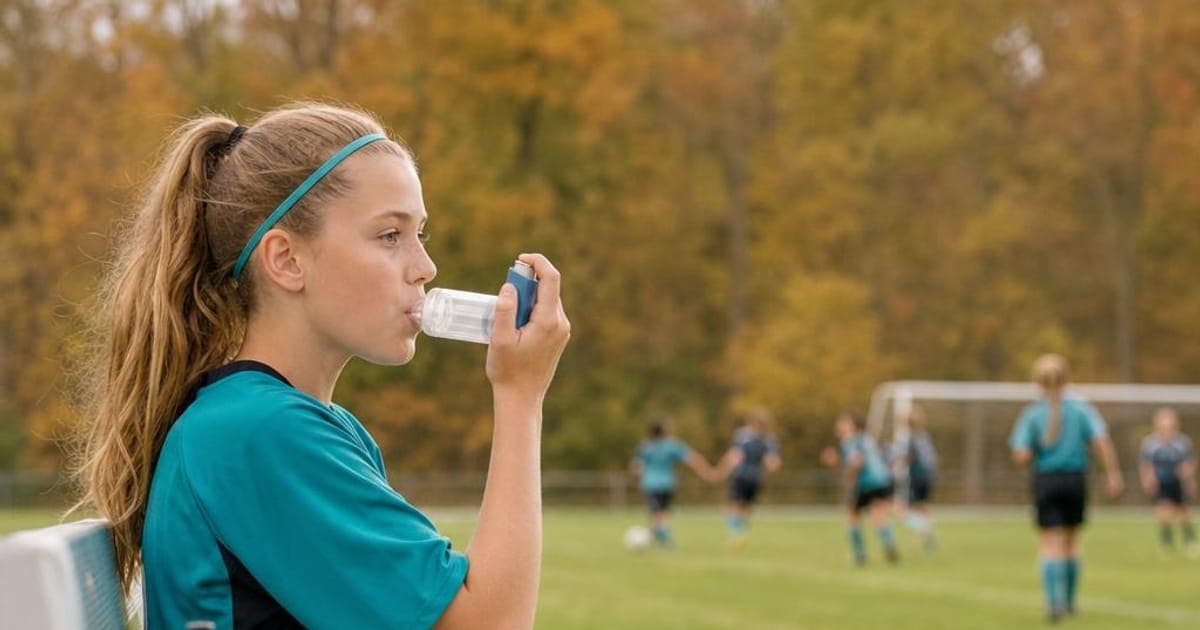
Your child coughs every time they run laps, needs to stop sooner than teammates, or complains that their chest feels tight after practice. These are classic signs of exercise-induced bronchoconstriction (EIB), often called exercise-induced asthma. It is common, very treatable, and should not keep a child off the field.
What happens in exercise-induced asthma
During hard exercise, children breathe faster and through the mouth, pulling in air that is cooler and drier than usual. In sensitive airways, that drying and cooling triggers the muscles around the airways to tighten. Cold winter air, dry indoor rinks, high pollen days, and poor air quality make it more likely.
Common signs
- Coughing during or right after running, especially in cold air
- Wheezing, chest tightness, or feeling unable to take a deep breath
- Symptoms that peak about 5 to 10 minutes after stopping and ease within an hour
- Getting tired much faster than peers, or avoiding activities they used to enjoy
- In younger children: stomachaches, irritability, or simply stopping play
How it is diagnosed
Your pediatrician starts with a detailed history and exam. Breathing tests (spirometry) measure how well air moves out of the lungs, sometimes before and after a dose of quick-relief medicine. If the diagnosis is still unclear, an exercise challenge test with a pulmonary specialist can confirm it. Testing matters: AAP News reports that among otherwise healthy children who get short of breath with exercise, EIB is actually found in only about 8% to 23%. Other causes, such as vocal cord dysfunction or simply being out of condition, are treated differently.
Treatment and prevention
- Quick-relief inhaler before exercise. A prescribed inhaler, used with a spacer 10 to 15 minutes before activity, prevents symptoms for most children. Your pediatrician will tell you exactly how and when to use it.
- Daily controller medicine if symptoms happen often, the pre-exercise inhaler is not enough, or your child also has symptoms at rest or at night.
- A real warm-up. 10 to 15 minutes of gradually increasing activity can reduce symptoms for an hour or more afterward.
- Cover the nose and mouth with a scarf or neck gaiter in cold weather.
- Control allergies and check air quality alerts on high-pollen or smoky days.
- A written asthma action plan shared with coaches, the athletic trainer, and the school nurse. New Jersey law allows students to carry and self-administer asthma inhalers at school with the required authorization from a parent and physician.
Before the season starts
A sports physical is a good time to bring up breathing symptoms. We can review your child's asthma action plan, check inhaler technique, and complete school and NJSIAA forms in one visit. Children already diagnosed with asthma should have their plan reviewed at least once a year through our asthma management program.
Call 911 or go to the nearest ER if your child:
- Struggles to breathe or speak in full sentences
- Has blue or gray lips or fingernails
- Does not improve within minutes of using a quick-relief inhaler
- Has chest pain, faints, or has a racing or irregular heartbeat with exercise
Breathing Trouble During Sports?
We diagnose and treat exercise-induced asthma, write action plans for school and teams, and teach inhaler and spacer technique. Learn more about our asthma care.
Call us at (609) 808-3123 during office hours:
- Monday to Friday: 9:30 AM to 5:30 PM
- Saturday: 9:30 AM to 12:30 PM
Common Questions from Parents
What are the signs of exercise-induced asthma in a child?
Coughing, wheezing, chest tightness, or shortness of breath that starts during exercise or within a few minutes after stopping. Symptoms often peak 5 to 10 minutes after exercise and ease within about an hour. Some kids only say they get tired faster than their friends or have a stomachache when running.
Is exercise-induced asthma the same as asthma?
The airways narrow the same way, which is why doctors now call it exercise-induced bronchoconstriction. Most children with asthma have symptoms with exercise, but some children only have symptoms with exercise. Both are treated, and both should be evaluated by a doctor.
Can a child with exercise-induced asthma still play sports?
Yes. With the right plan, most children with exercise-induced asthma play any sport they choose, including at competitive levels. Many Olympic athletes have asthma. Swimming is often well tolerated because of the warm, humid air.
Does my child need an inhaler before every game?
It depends on how often symptoms happen. Many children use a quick-relief inhaler 10 to 15 minutes before exercise. If your child needs it often or still has symptoms, your pediatrician may add a daily controller medicine. Your child's plan should be written down and shared with coaches and the school nurse.
What else can cause breathing trouble during sports?
Being out of condition, vocal cord dysfunction (a tight, noisy breathing-in sound from the throat), allergies, and less commonly heart problems can all cause breathing symptoms with exercise. Chest pain, fainting, or a racing heartbeat with exercise always needs prompt evaluation.
Sources
- HealthyChildren.org (AAP): Asthma and Exercise, How to Keep Your Active Child Breathing Easy
- American Thoracic Society Clinical Practice Guideline: Exercise-induced Bronchoconstriction (American Journal of Respiratory and Critical Care Medicine, May 2013)
- NHLBI: 2020 Focused Updates to the Asthma Management Guidelines
- AAP News: Exercise-induced dyspnea can have many causes
- American College of Allergy, Asthma and Immunology: Exercise-Induced Bronchoconstriction